
As an Amazon Associate, I earn from qualifying purchases.
Disclosure: This article shares research findings and lifestyle guidance but is not medical advice. For health concerns, consult a qualified healthcare provider.
Braided hairstyles are deeply cultural, popular, and cherished for their versatility and beauty, especially in Black and multicultural communities. Recently, however, independent testing has raised concerns about the presence of toxic chemicals, including lead, carcinogens, and volatile organic compounds (VOCs), in many synthetic braiding hair products widely sold in the United States (U.S.). Understanding these findings and why hypoallergenic or safer alternatives matter is crucial for anyone who wears or recommends protective styles.
What Testing Found in Synthetic Braiding Hair
In early 2025, Consumer Reports tested 10 popular synthetic braiding hair products, including brands commonly used for protective styles such as twists, braids, and extensions. The results were troubling and consistent across different product types.
Key scientific findings:
- Lead Detection: Lead was detected in 9 out of 10 products tested—a 90% detection rate.
- 100% Carcinogen Rate: Every product tested contained substances linked or suspected to cause cancer, including benzene and methylene chloride.
- VOC Emission: All tested products emitted Volatile Organic Compounds (VOCs) when heated — a critical finding, as sealing braids with hot water is a standard installation practice.
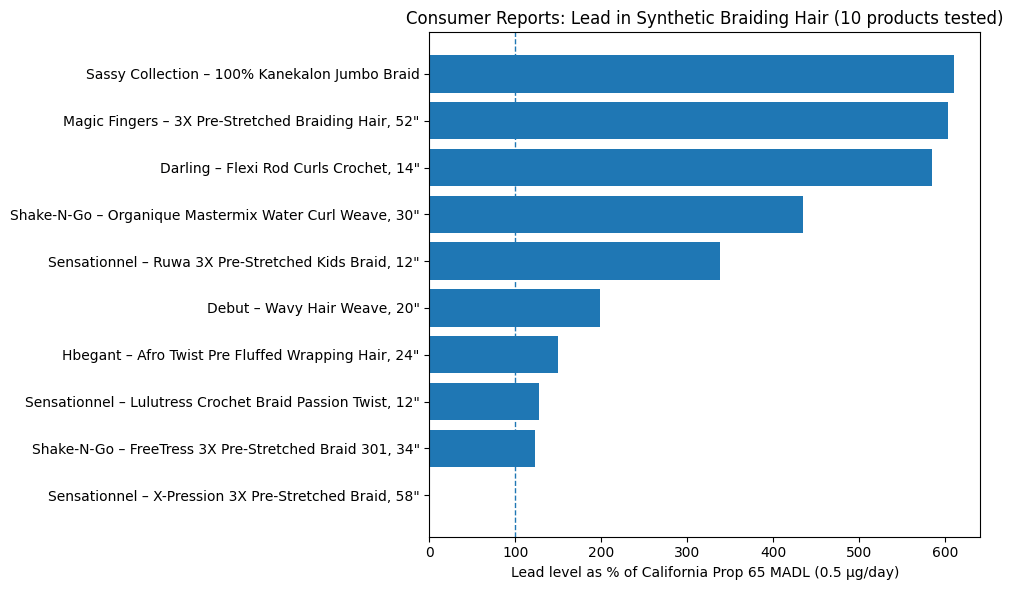
- Dangerous Levels: In at least one case (Sassy Collection), lead levels exceeded California’s “Maximum Allowable Dose Level” (MADL) by more than 600%.
Discussion of Consumer Reports Data Summary
The data indicate that certain brands exhibit higher concentrations of heavy metals than others.
Below is a visual representation of how frequently these specific toxins appeared in the 10 samples tested:
(Lead & Benzene Detection Rates)
| Brand | Model | Lead % of MADL | Lead Detected | Benzene Detected |
| Sensationnel | X-Pression 3X Pre-Stretched Braid | (Below MADL) | FALSE | TRUE |
| Shake-N-Go | FreeTress 3X Pre-Stretched Braid 301 | 123% | TRUE | FALSE |
| Sensationnel | Lulutress Crochet Braid Passion Twist | 128% | TRUE | FALSE |
| Hbegant | Afro Twist Pre Fluffed Wrapping Hair | 150% | TRUE | FALSE |
| Debut | Wavy Hair Weave | 198% | TRUE | FALSE |
| Sensationnel | Ruwa 3X Pre-Stretched Kids Braid | 338% | TRUE | TRUE |
| Shake-N-Go | Organique Mastermix Water Curl Weave | 435% | TRUE | FALSE |
| Darling | Flexi Rod Curls Crochet | 585% | TRUE | FALSE |
| Magic Fingers | 3X Pre-Stretched Braiding Hair | 603% | TRUE | TRUE |
| Sassy Collection | 100% Kanekalon Jumbo Braid | 610% | TRUE | FALSE |
To put this finding into context, the bar chart below shows how the lead levels detected in each product compare to California’s Maximum Allowable Dose Level (MADL), which researchers used as a safety benchmark.
What Lead and Carcinogens Mean for Hair Wearers
Lead is a well-studied toxin with no known safe level of exposure, particularly for children. The CDC states that there is no safe blood lead level, as the scalp is highly vascularized and may allow greater absorption of certain substances.
- Long-Term Risks: Lead exposure is connected to neurological harm, reproductive health effects, and organ damage.
- Benzene: A known human carcinogen linked to leukemia.
- Methylene Chloride: Often used as a solvent in synthetic fibers, this chemical is a suspected carcinogen that can cause dizziness and respiratory distress upon inhalation (especially when braids are steamed or dipped).
The concern isn’t just one-time exposure; it is the cumulative effect. These products are worn for weeks, allowing for prolonged contact with the skin and scalp.
Skin Reactions and Immediate Discomfort
Beyond the “invisible” toxins, many wearers experience contact dermatitis. Dermatologists and stylists report itching, burning, and redness. This is often caused by alkaline coatings, a chemical-finish applied to synthetic hair to make it heat-resistant and shiny. These coatings can cause a pH imbalance on the scalp, leading to the infamous “braid itch.”
How to Reduce Potential Irritation (Practical Tips)
If you are using synthetic hair, you can take steps to strip away some of these chemical residues:
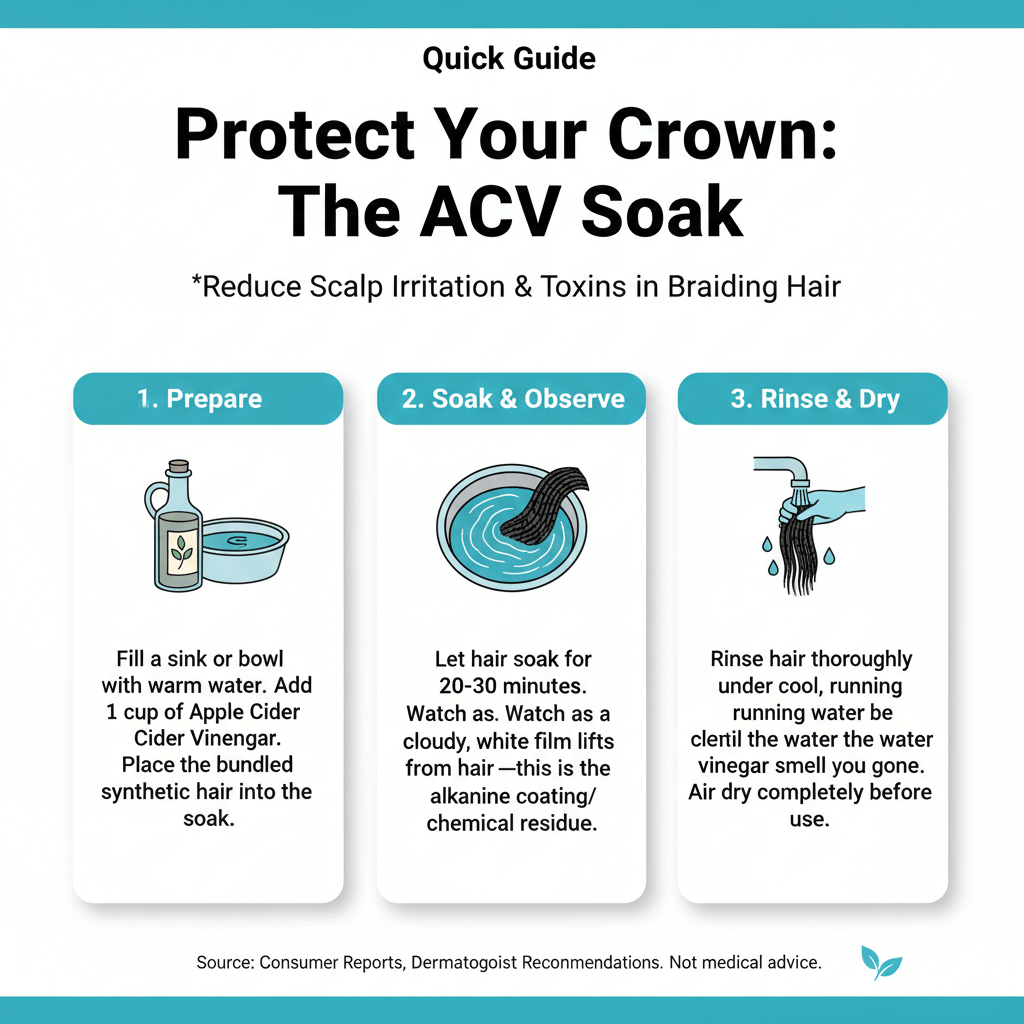
- The ACV Soak: Submerge the hair (while still bundled) in a mixture of 1 part apple cider vinegar (ACV) and 3 parts warm water for 20 minutes. You will see a white film lift off the alkaline coating. Rinse thoroughly.
- Patch Test: Install a single braid in an inconspicuous area and wait 48 hours to check for scalp sensitivity.
- Scalp Barriers: Use natural oils (like jojoba or coconut) on the scalp to create a slight barrier between the skin and the synthetic fiber.
Why Hypoallergenic Hair Is More Than a Buzzword
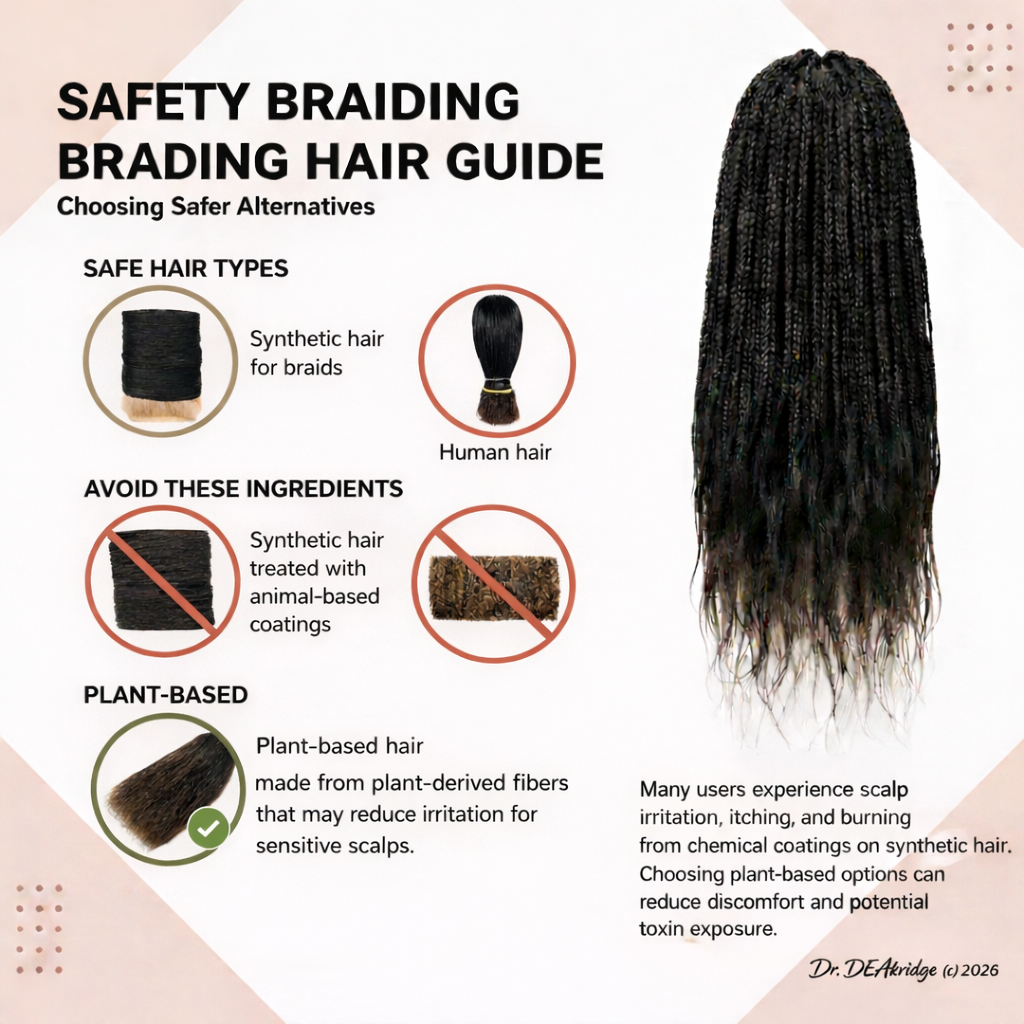
Because “hypoallergenic” is not a strictly regulated term in the hair industry, consumers must look for specific materials:
- Plant-Based Fibers: Brands using banana fiber, hemp, or wood pulp (like Rebundle) are not known to contain the same synthetic coatings commonly associated with VOC emissions.
- Human Hair Braids: While more expensive, high-quality human hair avoids the plastic-based chemical processing of Kanekalon.
- Low-VOC Synthetic: Newer brands are beginning to market “pre-washed” or “clean” synthetic options that omit toxic flame retardants.
Smart Choices for Health and Beauty
Protective styles should protect your health, not just your hair. In the absence of federal safety standards for lead in synthetic hair, consumers are responsible for staying informed. By choosing plant-based alternatives or properly pre-washing synthetic products, you can enjoy your favorite styles without compromising your peace of mind.
For more tips on healthy hair care routines, see How to Reduce Scalp Irritation After Protective Hairstyles.
 Dr. Akridge Speaks
One response to “Lead in Braiding Hair: Toxic Chemical Concerns and the Importance of Hypoallergenic Alternatives”
[…] Like Loading… ← Lead in Braiding Hair: Toxic Chemical Concerns and the Importance of Hypoallergenic Alternative… […]
LikeLike